Saturday, October 14, 2017

A Modest Proposal for Dealing with the National Anthem Protests

On Sunday, Vice President Mike Pence abruptly left the 49ers-Colts game because the teams stink in an expression of displeasure over the demonstration that occurred during the national anthem.

In response to the news of the vice president's dramatic walk-out, Cowboys owner Jerry Jones asserted that any of his players who fail to stand at attention during the performance of "The Star-Spangled Banner" would be exiled to the bench.

But Pence and Jones are simply riding the red-white-and-blue coattails of the man who resurrected this issue in the past month: President Donald Trump.

Trump, a WWE Hall of Famer who courageously broke through the "stick to sports" barrier that had long silenced prominent athletes when he won the presidency in 2016, is most famous in football circles for his remarkable run in the USFL. During his tenure as owner of the New Jersey Generals, Trump developed a sharp eye for quarterback talent. According to a Sports Illustrated feature by Tim Rohan, Trump boldly rejected the assessment of his coaching staff to select Randall Cunningham in the USFL Draft. He picked Doug Flutie instead. When Flutie failed to perform at a high level, Trump did what any fervent free market disciple would do: he demanded a bailout.

Rohan writes:
Not halfway through the season, a publicist named John Barron, who said he was “vice president of the Trump Organization,” called the wire services and went on a rant about the deal. He said the other owners had asked Trump to sign Flutie “for the good of the league,” and that they had made a verbal agreement with Trump to help pay for the part of the contract.
“When a guy goes out and spends more money than a player is worth,” Barron told the press, “he expects to get partial reimbursement from the other owners.” Trump later said Barron was misquoted and that he had never said he had paid Flutie more than he was “worth.”
The Washington Post recently reported that, around that time, Trump would call reporters masquerading as a publicist named “John Barron.”
Trump's brilliant stewardship of the Generals undoubtedly affords him substantial currency among NFL executives. When this fluent speaker of "locker room talk" holds court on personnel matters, they ought to listen:


Can we just pause here to marvel at this man's mellifluous elocution? I apologize for my pedantic vocabulary, but, like President Trump, I went to Penn. That makes me, like, a really smart person. I also know the best words. And I cannot be prouder of my alma mater's role in the cultivation of this unique mind.

Notwithstanding his eloquence, President Trump made an irrefutable point about the ongoing national anthem protests by athletes at sporting events. "That's a total disrespect of our heritage," Trump remarked. "That's a total disrespect of everything that we stand for."
Unfortunately, athletes have frequently dragged our flag and our military. Consider the following sentiment from former Arizona Cardinals safety Pat Tillman:
One thing I find myself despising is the sight of all these guns in the hands of children. Of course we all understand the necessity of defense....It doesn't diminish the fact that a young man I would not trust with my canteen is walking about armed.... (John Krakauer, Where Men Win Glory, 171).
That Tillman fellow has no respect for our troops. He's just like Colin Kaepernick!
Finally, we have a commander-in-chief who is willing to call out the shameful behavior of football players who dare to take a knee in a moment when they should be exhibiting reverence. There are only two times when it's appropriate to kneel: when you're in church, and when you're lining up in victory formation!

Americans should be grateful that President Trump has taken time from his busy schedule of golfing and cable news consumption to defend our culture and values from the dual threat of privileged athletes and whiny liberals. Recently, Trump bemoaned attempts to remove a statue of Robert E. Lee from a park in Charlottesville, Virginia. Can you believe these people who want to erase the legacy of an American hero like Lee? They will go to extreme lengths to avoid hurt feelings. If we're not careful, the leftists will spread their participation trophy agenda and weaken the resolve of our children.

With luck, President Trump will help this country rediscover its sense of patrioti$m, one koozie at a time. The recent lack of regard for our country's institutions and its leaders has been utterly appalling. For example, do you remember that game show host who ran for president as a publicity stunt? You know, the guy who relentlessly promoted the lie that President Barack Obama was born in Kenya? I think it was the same candidate who belittled John McCain's military service in Vietnam from the comfortable perch that five draft deferments built. He even made some insensitive comments about a Gold Star mother. Thank God that clown has been driven from the national stage so we can get back to the important work of making sure everyone stands for the anthem.

The president has already suggested to his followers that they protest the NFL until the league mandates universal participation in the pregame patriotic ceremony. It's an ingenious plan, one that will no doubt prove to be wildly successful. Nevertheless, I would like to offer my own modest proposal to resolve this dispute once and for all:

Ban the national anthem from all sporting events.

It's the only way to make "The Star-Spangled Banner" great again.

Our spoiled athletes and the owners who indulge them do not deserve the honor of the performance of this sacred hymn during their pregame ceremonies. For too long, television and league executives have exploited the song to imbue their meaningless contests with a gravitas they do not deserve and a grandiosity they have not earned. They have also reaped a financial windfall from the Pentagon, as the Department of Defense has paid millions of dollars for in-game patriotic displays. Those elaborate flyovers don't come cheap.

We can reinvest the recovered funds into the imminent war we will be waging on the Korean Peninsula. Our president has already laid the groundwork; here he is bravely rattling his Twitter saber:
Any leftover money can be directed toward the indefinite military operation in Afghanistan. Ultimately, the best way to honor our veterans is by recklessly pursuing opportunities to create more of them.

The decision to extricate our national anthem from sporting events should in no way discourage us from continuing the conversation we are not having about perceived racial inequality in law enforcement. Let's keep pitching our tents on the moral high ground. Our servicemen and servicewomen fought to defend our liberty; every chance we get, we must invoke the memory of their sacrifice to protect us from expressions of freedom.

Keep spouting that bumper sticker wisdom. There's no need to stray from the ideological safe space that the professional outrage artists have kept furnished just for you. Why risk a moment's discomfort to step outside of your own experience to ponder a viewpoint that is not your own?

Deflect. Distort. Deny. Degrade. We're not trying to listen; we're trying to win an argument.

The protesting athletes don't have a valid position, anyway. They really need to check their privilege. We let them make millions of dollars to play a children's game. It's not like they had to work hard like our ancestors did. And all we ask in return is that they not hijack our national anthem.

The anthem isn't about them. It's not even about the troops. It's about us, and it's about ensuring that everyone knows just how much we support the troops. If the protesting athletes can't understand this basic concept, then we have no choice but to take the national anthem away from them.

It's a time to rise. It's not a time to stand for something.

-30-

Wednesday, August 16, 2017

The War For Historical Memory

The great force of history comes from the fact that we carry it within us, are unconsciously controlled by it in many ways, and history is literally present in all that we do. It could scarcely be otherwise, since it is to history that we owe our frames of reference, our identities, and our aspirations.
 - James Baldwin, "Unnameable Objects, Unspeakable Crimes"

Two days had passed since the Charlottesville uprising, and President Trump had something to say. 

The president strode to a podium in the lobby of Trump Tower and faced a press corps that he has cast as the enemy of his nascent administration. Immediately, Trump was peppered with questions about his response to the white supremacist rally in Virginia, which culminated with a car attack that claimed the life of Heather Heyer and injured 19 of her fellow counter-demonstrators.   

In the course of justifying his deliberate response to the tragedy, the president defended the peaceful nature of the torch-wielding neo-Confederates who gathered in Charlottesville to protest the planned removal of a Robert E. Lee statue from a public park. The land had once borne the name of the famous general who commanded the mighty Army of Northern Virginia, but has since been rechristened Emancipation Park.      

"There were people protesting very quietly the taking down of the statue of Robert E. Lee. I'm sure in that group there were some bad ones," Trump observed.

It was unclear where in the "master race" morass the peaceniks positioned themselves. Perhaps they were drowned out by the mob of people alternately screaming, "Blood and soil!" and "Jews will not replace us!" Or maybe they were stationed in the rear of the Tiki Torch Brigade, behind the Confederate and Nazi flag bearers.


After applying a fresh coat of whitewash on the aims of the protesters, the lecturer-in-chief proceeded to offer the nation a history lesson.

"George Washington was a slave owner," Trump declared. "So will George Washington now lose his status? Are we going to take down statues to George Washington?"

"You're changing history," the president cautioned to those who dare to deconstruct monuments to the Confederacy. "You're changing culture." 

The president's words were a salve to the aspiring Nazis, cosplaying militiamen, and self-appointed guardians of white culture who secured what they sought in Charlottesville: affirmation and validation. Trump's comments also served as the latest salvo in a struggle that has lasted more than 150 years: the war for the legacy of the Civil War.

Hostilities commenced when the ink dried on the terms of surrender at Appomattox Court House. The defeated South experienced a radical reconfiguation of its social order. Previously enslaved blacks were now empowered; they were afforded access to the ballot box and protected by the Union Army.

For a brief period, black politicians represented the South in government. Hiram Revels of Mississippi became the first African American to be seated in the US Senate. Black men won office in local and state elections as well, buoyed in part by a prohibition that disenfranchised former members of the Confederate Army and government.

But in the garden of Reconstruction, the vile weed of racism remained rooted in the soil. The pressures of physical resistance in the South, fatigue in the North over the continued military occupation of the repatriated southern states, political scandals emanating from the White House, and an economic recession combined to buckle the resolve of President Grant. In the 1870s, Reconstruction gave way to Redemption. The white power structure reasserted itself. And the South rose again.

In Redemption: The Last Battle of the Civil War, author Nicholas Lemann articulates the philosophical position of the disciples of Redemption:
"Whites there had in mind instead a social compact under which Negroes would not formally be slaves anymore, but under which they would be unable to vote, hold office, or have legal rights- in which they would be completely powerless, subject to the will of whites without any protection or recourse, even when that will was expressed in individual violence and sexual violation." (28)        
The socioeconomic and political progress of Reconstruction were erased and replaced with a social structure that bore a striking resemblance to the antebellum order.

Lynchings became commonplace, a penalty designed to maintain the racial hierarchy. These extrajudicial killings routinely doubled as social events. White spectators gathered to watch a violator of the race codes pay his or her penance: death by hanging.

Gradually, the number of lynchings decreased as segregation was codified under what would be called Jim Crow laws. In Plessy v. Ferguson (1896), the Supreme Court recognized the legality of these legislative acts.

In a society that demanded black folks "know their place," socioeconomic advancement proved a dangerous and delicate dance. Financial success meant potentially challenging the color line, and thus endangering oneself. Failure was expected, perhaps even demanded as validation of the wisdom of segregation.

The key to survival in the South was instilled at a young age. Richard Wright shared the lesson his mother imparted to him in "The Ethics of Living Jim Crow:"
"She would smack my rump with the stave and, while the skin was still smarting, impart to me gems of Jim Crow wisdom. I was never to throw cinders anymore. I was never to fight any more wars. I was never, never, under any circumstances to fight white folks again." 
In Black Like Me, author John Howard Griffin interviewed an elderly gentleman who cut to the crux of the dilemma. "They put us low," he lamented, "and then blame us for being down there and say that since we are low, we can't deserve our rights," (40).

****

As the white redeemers secured dominion over the physical space of the South, they opened a second front in the pages of our history books. It was not enough to re-establish the societal hegemony of the white race in the present. They had to win the war for the past, too.

Southern sympathizers took to the task in earnest. The war, they argued, hadn't been waged to perpetuate slavery. The Confederate states were simply protecting their autonomy from an overbearing federal government. They exercised their democratic right to secede from the Union, and were invaded as a result. In time, the Civil War would be rebranded "The War Between the States," or the "War of Northern Aggression."

This grand reconception of the origin of the Civil War has come to be known as the Lost Cause. Like all myths, it defies the primary historical evidence that places slavery as the primary driver of the South's secession. The constitution of the Confederate state of Alabama was nearly a carbon copy of the US Constitution, with the exception of a special section dealing with slavery; the first statute in this section asserts: "No slave in this State shall be emancipated by any act done to take effect in this State, or any other country."

Mississippi's Declaration of Secession began with the following pronouncement:
"Our position is thoroughly identified with the institution of slavery-- the greatest material interest of the world. Its labor supplies the product which constitutes by far the largest and most important portions of commerce of the earth. These products are peculiar to the climate verging on the tropical regions, and by an imperious law of nature, none but the black race can bear exposure to the tropical sun. These products have become necessities of the world, and a blow at slavery is a blow at commerce and civilization."
South Carolina's Declaration of Secession pointed to the Northern states' abdication of their constitutional responsibility to return runaway slaves to their Southern masters as a reason to withdraw from the Union.

Yet, the lies that obscured the truth about the war paled in comparison to the intellectual gymnastics Lost Causers undertook to explain the behavior of slaves during the conflict. In this effort, the redeemers had to negotiate a challenging paradox: how to paint the behavior of Civil War-era slaves in a positive light while simultaneously justifying the barbaric treatment of emancipated black citizens in the Jim Crow era.

In The Negro: The Southerner's Problem, Thomas Nelson Page endeavored to make a case. He spoke glowingly of the slaves who were left to tend to the plantations of their masters. "No race ever behaved better than the Negroes during the war," Page crowed. "Many a master going off to the war intrusted his wife and children to the care of his servants with as much confidence as if they had been of his own blood," (21-22).

In Page's telling, the Union's triumph created a breakdown in the social order. Black men in particular, once loosed from the shackles of slavery, constituted an existential threat to the white race. Page expounds on this point at length:
"Then came the period and process of Reconstruction, with its teachings. Among these was the teaching that the Negro was the equal of the white, that the white was his enemy, and that he must assert his equality. The growth of the idea was a gradual one in the Negro's mind. This was followed by a number of cases where members of the Negro militia ravished white women; in some instances in the presence of their families," (95).
The portrait of white men as the saviors of their race and protectors of their women is a familiar one to those of us who have endured a screening of The Birth of a Nation. Fears of miscegenation had existed since colonial times. The thought of race-mixing infuriated those who viewed whiteness as a formative part of the American identity. Of course, these anxieties only applied to sexual relationships between white women and black men.

Page's vision of the relationship between blacks and whites in the South was surgically constructed to benefit the institution of slavery and the white men who profited from it. The only way to "tame" the black male was to treat him like an animal. Once cowed, he would behave. However, emancipation had reverted him to his original, uncivilized state- a brute who was unable to control his sexual impulses.

It did not matter that Page's low opinion of emancipated black men served as the most convincing indictment of his absurd apologia. If black men were unable to control themselves around white women, why would a master have entrusted his plantation and his family to his slaves? If the institution of slavery had the salutary effects Page claimed, why did they immediately disappear once the war had ended and the practice was banned?

Page's argument was not meant to convince posterity; it was crafted to justify white supremacy. It does seem fitting, though, that such an irrational social structure would rest on an intellectual foundation made of sand.

The selective memory extended to remembrances of the war. In an op-ed that was published in the New York Times, historian David Blight recounted the ways in which Lost Cause revisionism infected Civil War memorials. "The Southern dead were honored as the true 'patriots,' defenders of their homeland, sovereign rights, a natural racial order and a 'cause' that had been overwhelmed by 'numbers and resources' but never defeated on battlefields," Blight wrote in "Forgetting Why We Remember."

To commemorate their victory in the struggle to define the Civil War, the redeemers commissioned statues and icons of their Confederate heroes. It should come as no surprise that "largely, Confederate monuments were built during two key periods of American history: the beginnings of Jim Crow in the 1920s and the civil rights movement in the early 1950s and 1960s," as Caroline Talleman reported in an article for Town and Country Magazine. 

Rebel soldiers and political leaders were shrouded in the fog of romantic nostalgia. The pervasive suffering of the Confederate army, exacerbated by incompetent generalship and a lack of military discipline, was forgotten. Robert E. Lee, a vicious slave owner who took up arms against the Union of his own volition, was recast as a reluctant warrior who abhorred slavery. He was also regaled as a military genius of the first order. The graveyards of Gettysburg tell a different story.

But these statues did not simply exist to paint a rosy picture of an ugly period in our nation's history. They were prominently placed as visual reminders of the failure of Reconstruction and the re-establishment of the racial hierarchy that relegated black citizens to second-class status. Despite the outcome of the Civil War, black folks in the South lived as a defeated and conquered people.

****
This brief tour through the historical wreckage of the Civil War exposes the tragic ignorance of President Trump and those who follow down the same logical path he advanced in his press conference. For a group of people who seem intent on wallowing in a state of constant grievance, the president and his followers have exhibited a stunning incapacity for empathy during this ongoing travesty.   

This is not an issue of sparing people's hurt feelings. The battle to rid the public square of Confederate monuments is not an effort to erase history, but to reclaim the past. These statues do not further our understanding of the Civil War. They pervert it. And the aggrieved white men who rallied at the Robert E. Lee statue in Charlottesville are not fervent defenders of history. They view the world Lee sought to preserve not as a tragic mistake, but as a prototype for the white ethno-state they yearn to create.

It is past time that we deconstruct Lost Cause mythology and cut through the cloud it has created in our collective memory. Let's aggressively confront our past rather than passively celebrate it. And let's appreciate the Confederacy as it was, not as Southern sympathizers and architects of Jim Crow imagined it to be.
  
-30-

Saturday, April 8, 2017

It's Time for America's War Fever to Break

I have a confession to make:

I voted for Gary Johnson in 2012.

For the first eight years of my voting life, I had reliably pulled the lever for Democratic presidential candidates. In 2004, I voted for John Kerry. In 2008, I hopped aboard the Obama train. Like most people my age, I was spellbound by then-Senator Obama. His speeches were nothing short of inspirational. He spoke about race in a way that oozed nuance and empathy. Indeed, his biracial heritage enabled Obama to view the historical chasm between white and black folks from a lofty perch constructed by his lived experience.

After eight years of the Bush Administration, I was ready for hope and change. I was tired of the way in which patriotism had been co-opted and weaponized by the Republican Party after 9/11. Bush officials and their cronies in the conservative media advanced dubious counter-terror and national security policies, packaging them in the American flag. They callously exploited "the troops" as rhetorical pawns to shield from scrutiny disastrous military decisions like the Iraq invasion.  

I watched Fox News fairly regularly when I was a college student. Perhaps I was a masochist, but I was fascinated by the dishonest framing of the Iraq War debate specifically and the behavior of the Bush Administration more generally. Fox News commentator Sean Hannity, for example, would routinely accuse his liberal targets of "providing aid and comfort to the enemy." For those of you unversed in the language of the Constitution, that phrase is the definition of treason as written by our Founding Fathers.

How ironic that, roughly a decade later, Hannity would emerge as the chief shill for a Republican president who has openly bragged about his stern opposition to the Iraq War. Apparently, there is a statute of limitations on treason.

In 2004, Hannity published a book entitled Deliver Us From Evil. Buried in the first chapter of his screed, which was presumably written from the living room of his glass house, is this gem:
"Indeed, the greatest threat to our resolve today in the War on Terror is the political liberalism- and selfish opportunism- of the Democrats. From its leaders on down, America's left-wing party is ideologically inclined toward appeasement, toward dismissing or understating the terrorist threat, and toward containing, rather than confronting, the despotic regimes that aid and abet the terrorists. Whatever momentary interest its members may show in the war is inevitably swamped by the party's unquenchable thirst for political power." 
Hannity crafted this statement in the midst of a concerted national campaign to smear Senator Kerry's war record. It was also in the aftermath of a successful effort to call into question the courage of Senator Max Cleland, a man who lost limbs during his combat tour in Vietnam.

But enough with Hannity. Analyzing his inane political stances over the years is akin to pummeling a straw man. In truth, he was not alone. Fellow commentator Bill O'Reilly exhorted critics of the Iraq War to "shut up" once the conflict commenced because nothing less than unquestioning loyalty to the mission would undermine it. Newt Gingrich opined that Osama bin Laden was encouraged by the political unrest unfolding in the midst of the War on Terror. Cindy Sheehan, a Gold Star mother and prominent war critic, came under severe attack as her profile rose. Finally, Obama himself was raked over the coals for having the audacity not to wear a flag pin on his lapel during his presidential campaign.

It was all part of a playbook to which the Republican Party had adhered since the Vietnam War. Liberals were not patriots. They were cowards, unwilling to support armed confrontations with evil. It was unsurprising that Fox News emerged as the locus of the smear campaign. FNC Chairman Roger Ailes had been serving conservatives the same diet of anti-Democrat invective since his days as Richard Nixon's ad man.

Honestly, I could write a book about the chicanery of the conservative political and media elites during the Bush Administration. Their behavior was an insidious attempt to undermine democracy and free expression. I had enough. I believed Obama's election would serve as an antidote to our poisoned political discourse. More importantly, I thought his presidency would steer the country in a more prudent direction with respect to our counter-terror policies.

I was wrong.

Barack Obama preserved and expanded the Bush Doctrine. He made liberal use of drones in countries on which the United States had not declared war, like Yemen and Pakistan, relying on the AUMF (Authorization of Use of Military Force) agreement Congress passed after 9/11 to give President Bush the flexibility to attack terrorist havens. Evidence emerged that drone operators engaged in a practice known as "double tap," which involved re-striking a target after first responders arrived on the scene. Funerals for the terrorists who were killed in strikes were also subjected to drone attacks.

Although the drone program was billed as a surgical bombing campaign that limited civilian casualties, it became clear that drone operators frequently were unsure of who would be victimized by the missiles that were dropped onto targets. More disturbingly, the Obama Administration would count any military-age male who was killed after a bombing as an enemy until proven otherwise. The tactic was reminiscent of the Bush Administration's practice of labeling every combatant killed in the Iraq war zone a terrorist.

Moreover, President Obama's extrajudicial drone program killed American citizens. In 2011, a drone strike authorized by Obama killed Anwar al-Awlaki, an al Qaeda senior member who recruited jihadis through online videos. He is also alleged to have plotted attacks on the United States, including the attempted bombing of an airplane bound for Detroit in 2009. Two weeks later, Awlaki's son, Abdulrahman, became "collateral damage" in a drone strike in Yemen.

No one will cry over the corpse of al-Awlaki, an evil man who actively pursued the mass murder of innocent people. The tears should be reserved for his innocent son, and for the utter disregard for the right to due process that our constitutional law professor-in-chief exhibited during his tenure in the White House.

A teenager was killed as a result of a program whose success in preventing the spread of terrorism was, at the very least, debatable. In fact, one could make a compelling counter-argument that the murder of civilians would only cause the cancer of terrorism to metastasize.

So, where was the debate?

I knew my vote didn't matter. Barack Obama was winning Pennsylvania, with or without my support. If Mitt Romney somehow discovered a path to victory, he would simply continue the foreign policy that George Bush created and Obama expanded.

I made a choice. I chose Gary Johnson.

*****

Fast forward to 2017. Barack Obama has left the White House. In his place resides the least competent person to ever hold the office of the presidency. Nearly three months into his term, Donald Trump has validated every concern I harbored about him. 

He knows nothing about policy, as evidenced by the seriously flawed healthcare bill he unsuccessfully tried to bully through Congress. He promised to appoint "only the best people," but a large number of staff positions have gone unfilled. Michael Flynn made it one month as National Security Adviser before he was forced to resign when his contacts with the Russian government were exposed.

Meanwhile, Trump's son-in-law, Jared Kushner, has an absurdly ambitious list of responsibilities, but zero government experience. Ivanka Trump™ has taken a position as an adviser, but remains tethered to her business empire. Like her father, she is a walking conflict of interest. Ivanka Trump's supporters hail her as a feminist champion; yet "having it all" should not mean Ivanka gets to have it both ways when it comes to the positions her father advocates.  

The reckless disregard for the truth that Candidate Trump demonstrated has carried over to President Trump. The Idiot King of the Birther Movement lies constantly. He lied about the size of his inauguration crowd. He lied about the election, claiming that illegal immigrants voted against him in California, which pushed the popular vote total in Hillary Clinton's favor. He also lied about Massachusetts residents crossing into New Hampshire to cast ballots against him. Most importantly, he lied about President Obama wiretapping Trump Tower. 

Trump's apologists claim that his opponents should take Trump seriously, not literally. If citizens cannot take President Trump at his word, how can he be taken seriously? How can he possibly hope to lead the country? In the Trump Era, truth has been rendered meaningless.

Ultimately, Donald Trump remains the thin-skinned, insecure bully that he was during the 2016 election. There is no chance that he will change or grow into the job. Our only hope is that he does not reverse the economic recovery with his shortsighted protectionist policies. 

On Thursday, however, Trump found the elixir that could reverse the fortunes of his dysfunctional presidency. He discovered the power of the bomb.

After video evidence emerged of Syrian president Bashar al-Assad's forces deploying chemical weapons on a hospital, Trump decided to act. He ordered a cruise missile attack on a Syrian air base from which the chemical weapons presumably emanated. 

The media, which had previously busied itself by wildly speculating about the Trump campaign's connection to Russia, jumped at the opportunity to celebrate this righteous display of American weaponry. Recovering fabulist Brian Williams could not help but be amazed by the "beauty" of our arsenal of democracy:
It was a highly revealing display, one reminiscent of the glowing coverage Operation Iraqi Freedom received at the beginning of the invasion. War makes for good television, and those who do not stick to the script are often jettisoned. Just ask Phil Donahue, a staunch Iraq War critic whose television program was cancelled by MSNBC at the height of war hysteria. Ashleigh Banfield was marginalized within the NBC News division for rightly calling into question the sanitized images of battle that the networks were selling to the American public.

Across the cable news landscape, the tomahawk missile deployment was treated like an elaborate fireworks display. It was entertainment. Retired generals were brought into studios to shower praise on Trump's decisive action. Here's hoping, unlike in the midst of the Iraq War, they were not parroting talking points prepared by the Pentagon.

Pundits joined the cheerleading session. Fareed Zakaria proclaimed that Trump "became President of the United States" by initiating the attack, a statement whose grandiosity is only eclipsed by its emptiness. Zakaria had plenty of company in the media world as the task of propping up Trump's presidency commenced in earnest.

Despite reports of extensive damage to the targeted air field, the runway was not affected. The base was operational by the next day. So what was the point? To flex our muscles? To show that we do not tolerate chemical weapons attacks?

For the sake of the Syrian civilians trapped in the middle of a civil war, I hope that the bombing dissuades Assad from further use of chemical weapons. However, the civil war in Syria will abide. People will continue to perish. A selective display of outrage will not fundamentally change Assad's brutality, which he clearly views as an existential necessity.

It will also not absolve our country of its own misdeeds and miscalculations in the region. For two years, the United States has actively supported Saudi Arabia's incessant bombing of Yemen, which has resulted in scores of civilian casualties. The failure of the Iraq War created the conditions which fueled the rise of ISIS, a fighting force composed in part of disaffected Ba'athists who were purged from the Iraqi Army and shut out from the government in Baghdad.

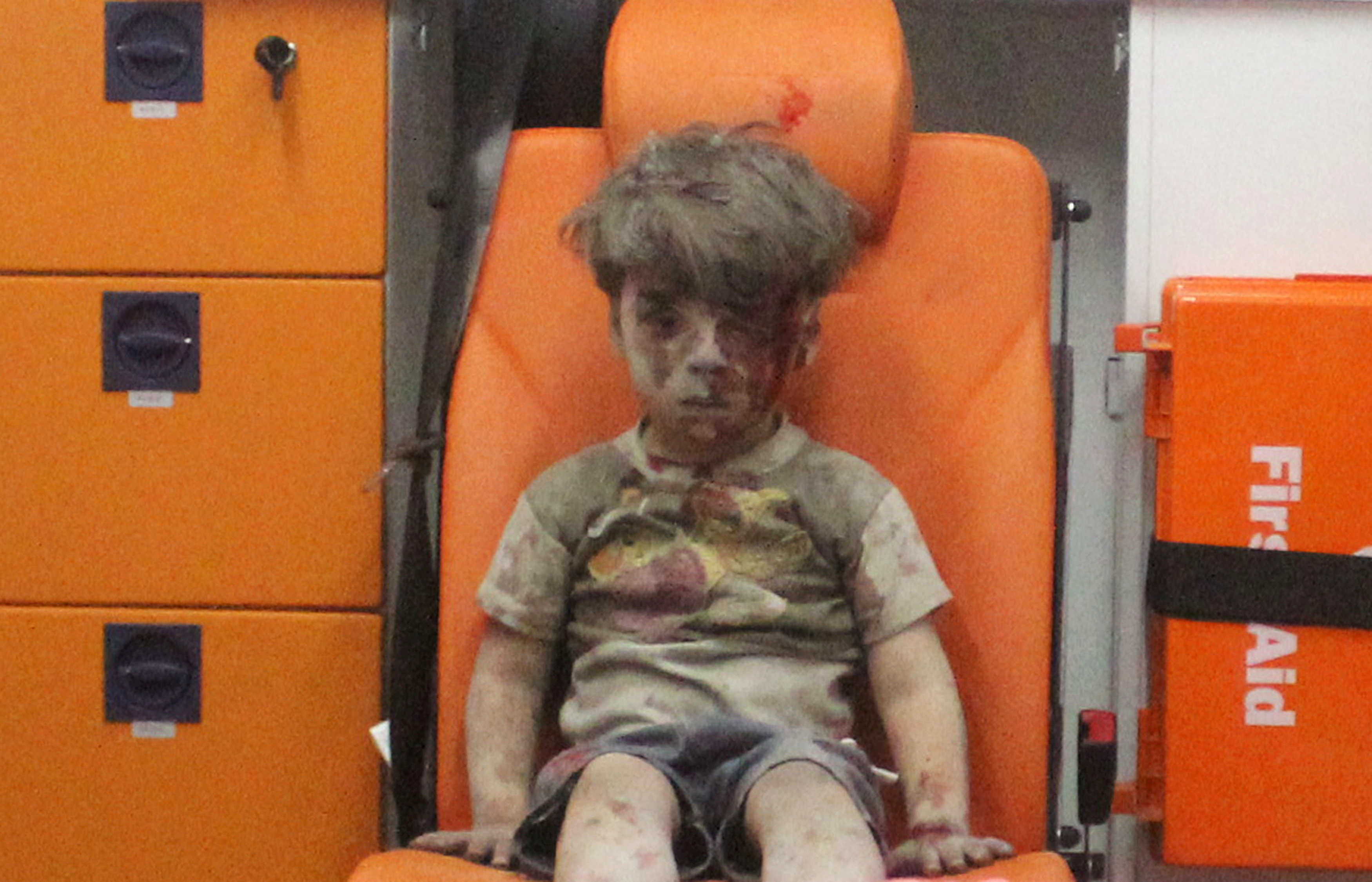
The ill-conceived raid in Yemen that Trump authorized in January, which resulted in the death of Navy Seal William "Ryan" Owens, also led to the deaths of 10 women and children. Among the deceased was 8-year old Nawar al-Awlaki, the daugher of Anwar al-Awlaki.

Compare the picture of Nawar with this image of a Syrian boy, which caused much consternation around the world. As we address the depravity of Assad, how about we confront our own malfeasance?

The more disingenuous among us would label such an exercise a false equivalence. This rhetorical tactic is a close relative of "what about"-ism and ad hominem artistry; they all function as defense mechanisms. Rather than accept even a moment of discomfort or contemplation, practitioners of these forms of sophistry place the onus of critical thought back onto the questioner. They believe that, by attacking the integrity of the questioner, they are bolstering their ideological beliefs. In fact, they only expose the weakness of their position.

No rational person would equate Assad with the Bush-Obama-Trump triumvirate. Assad is a brutal dictator who has clung to power by indiscriminately slaughtering his citizens. The American presidents in the post-9/11 era, by contrast, have been required to face a series of geopolitical challenges that do not lend themselves to easy solutions. Barack Obama did not deploy drones to kill civilian noncombatants. He sincerely wanted to address national security threats without putting soldiers in harm's way. In an era when enemies do not wear uniforms, are not bound by traditional borders, and thrive in countries with ineffectual governments, drone activity may well be a necessary evil. Moreover, the Special Forces mission in Yemen that killed civilians was not designed with that goal in mind, obviously. It was a tragic consequence of a mission that did not go according to plan.

Notwithstanding our good intentions, innocent people have lost their lives. And, rather than cower behind euphemisms like "collateral damage," we need to reckon with that reality at some point in this post-9/11 era. We need to stop viewing the Constitution as an inconvenience and make it the compass we use to guide us through the various moral quandaries we face in the Middle East.

When war is unavoidable and necessary, we should go. But we shouldn't be celebrating exercises of military power; nor should we be speculating how a bombing might boost the president's popularity.

Furthermore, when we refuse to confront our own mistakes, we perpetuate them. And we exacerbate our problems when we insist on using the troops as a collective shield to repel criticism of military action:
We owe it to the soldiers who have borne the burden of our 15 years (and counting) of endless war to start asking questions and demanding answers. When bombs begin raining down on sovereign countries in our collective name, critics should not be shamed into silence and battered with red-white-and-blue cudgels. Instead, the tone of the questions should only get louder and sharper. Such is the responsibility of a citizen in a representative democracy.

When will the narrative drivers in the media internalize their mistakes during the Iraq War? When will Congress reclaim its power to declare war? Where are all of the Constitutional originalists who cheered for the appointment of Neil Gorsuch to the Supreme Court? When will we stop conflating obedience to the government with respect for the troops? Who benefits from this environment?  

When will we learn? When will our war fever break?

-30-

Saturday, February 25, 2017

For Pete's Sake

It was the first day of my new life as a teacher.

I wasn't ready. 

I had just graduated from the University of Pennsylvania. During my senior year in college, I had decided to apply for a program that my high school alma mater, St. Joseph's Prep, has been running for years. It is called the Alumni Service Corps. The pitch is simple: a Prep graduate who has just finished his college studies returns to the school to offer one year of service. In return, he receives a small monthly stipend, free housing, and on-the-job training. 

It was an easy decision to apply. The two people I admire most in this world are my parents. My dad is an excellent teacher and, though I never consciously realized it, I have always wanted to be just like him. His entire life is oriented toward helping others. In that effort, he has an equal partner in my mother. Mom is one of the most generous and caring people you could ever hope to meet. For years, she organized an incredible Christmas gift operation for the adults who lived at the Cardinal Krol Center until the facility was shuttered by the Archdiocese. 

I wanted to be a teacher, too. I also hoped for an opportunity to help others. Without the education I received at the Prep, I never would have survived at Penn. Heck, I likely never would have gained admission in the first place. I owed the school a tremendous debt. The ASC Program was my opportunity to provide repayment.

After a thorough application process, I was offered a position. I would be tasked with teaching two History classes and performing other types of service at the school throughout the day. Often, this involved proctoring a class for an absent teacher or monitoring the cafeteria to ensure that students threw out their trash after they finished lunch.

It sounded like a good deal. Two classes? No problem! My plan was to get the textbooks in May and start plotting my courses in earnest. I would comb through the material to find points I could emphasize and primary sources I could introduce to complement the curriculum. Alas, the best laid plans of mice and men....

I did not find out what specific courses I would be teaching until August. I did not receive the assigned textbooks for the courses until the week before the start of the school year. 

It was a gut punch, but I opted to try my best. My best was not good enough.

My students likely smelled my fear as soon as they walked in the classroom. Here was a rank amateur trying to teach them a subject he knew well, but had zero experience in translating. I lacked the confidence to command the room, and they took advantage of my weakness. 

The pressure was too much to bear. The parents of these students were spending a fortune to send their kids to the Prep. They rightly expected a superior education. 

I began to crack. I would work late into the night, fruitlessly trying to get ahead of the curriculum. Sleep was a luxury I could not afford. When I took showers, I would find small clumps of hair falling out of my head.   

By October, I was ready to quit. The students deserved better. The school deserved better.

I deserved better, too. I was tired of raising my voice. I was tired of working relentlessly to prepare my lessons, only to be greeted with indifference when I walked into the classroom. I was tired of the person I had to become in order to survive as a new teacher. I was tired of losing sleep. I was tired of the stress. I was just tired. 

There are many people who helped carry me through that year, too many to thank, but one person in particular stands out in my memory. That person is Pete Reid.

Pete was assigned as my mentor teacher. He had just returned to the Prep after waging a successful battle with leukemia that, by all rights, should have killed him. Though he miraculously survived, his triumph over cancer was a Pyrrhic victory. Pete looked like a ghost that had somehow retained its flesh. Most of the color from his body had been sucked out of him, leaving him a pallid shell of himself. There were times when Pete's every movement seemed labored, when the simple act of rising to his feet required a herculean effort. 

And yet, the man stood up to face every challenge. His immune system had been crippled to the point that a common cold would cause an existential crisis, though I do not recall Pete requiring many days off from school. He continued to suffer, but he endured his pain with such grace and persistence. He was determined not to let the defeated cancer define his life, to rob him of any more days than it already had. He was a happy warrior. 

Pete's courage inspired me. Indeed, his example powered me through the challenges I had been experiencing. When I was overwhelmed, I turned to Pete for advice. When I felt I could not continue, I swiveled in my office chair and looked at my colleague, who refused to quit in the face of much more difficult obstacles.

We talked about all sorts of subjects. We discussed our shared love of history, of course. We debated the topics we were both teaching and shared information we had gleaned from our own reading. Pete was incredibly generous in sharing his teaching materials with me, and I tried my best to return the favor. I offered to help him grade quizzes and homework assignments, which he occasionally accepted. Looking back, I see now that Pete didn't really need my assistance, but I think he sensed that allowing me to share his burden would lighten my own. 

I made a habit of observing Pete's classes when time allowed. As I watched Pete at work, I saw a man who was completely in his element. He was a damn good teacher. He owned the classroom. He was at home there. The 200 minutes per day he was teaching history were likely his most peaceful. That time afforded him a welcome respite from the health issues that plagued him during the year.

No words, no matter how eloquent, could adequately satisfy the incredible debt I owe Pete. But words were all I had to offer when, a few months ago, I heard the news that Pete had been diagnosed with pancreatic cancer. It was a death sentence for a man who, in the decade since his leukemia battle, had been steadily rebuilding his life. He and his wonderful wife, Jen, had welcomed a son, PJ, into the world. He had transitioned out of the classroom and into an administrative role at the Prep, though he and the school parted ways before this academic term. To say Pete's fate was unfair does not do justice to the tragic hand life had dealt him.

However, knowing Pete, I am sure he resolved to play the hand anyway. And so I sent him a card and thanked him for his guidance and encouragement during my ASC year. I expressed my hope that the inspiration he provided me and so many others would strengthen him as he prepared once again for a bout with cancer. 

Pete Reid passed away this morning. Even our heroes can endure only so much pain.

Pete's memory lives on in all of us who were lucky enough to call him our teacher, our colleague, and our friend. Remember the lessons he imparted. Draw reassurance from his indomitable spirit. Please keep his wife and son in your thoughts and prayers. And, for Pete's sake, let's find a cure for cancer. 

-30-               
       

Tuesday, November 8, 2016

What Happens on Wednesday?

Today marks the merciful end of the 2016 presidential election. By midnight, we most likely will know which candidate has prevailed and will be tasked with the responsibility of leading this nation through the end of the decade. Soon afterward, the deluge of campaign commercials will disappear from our televisions and, with a little luck, our mad world will regain a measure of sanity. Yet, as anxious as I am to usher in the end of this election cycle, I wonder if the damage that has been wrought is irreparable. One question in particular nags me.

What kind of country will we be on Wednesday, November 9?

The expedient answer is the dismissive one. Nothing will change. Everything will be fine. Nobody’s life is much affected by the triviality of selecting the next leader of the free world, anyway.

I beg to differ. Not this time. Not after the campaign that Donald Trump has waged for the White House.     

Since the announcement of his candidacy in June 2015, Mr. Trump has sold the electorate a vision of America so dystopian that I wonder if the windows at Trump Tower require a more rigorous cleaning. Trump has placed America in front of a funhouse mirror, presenting the nation with an image of itself as a crime-infested hellscape. In his view, the United States has lost its place atop the global marketplace due to the mismanagement of political elites who have enriched themselves at the expense of their fellow citizens. And, like other aspiring authoritarians, Trump has offered his rabid supporters a mixture of  vulnerable and powerful scapegoats to blame not only for America’s perceived decline, but also for their own reversals of fortune. Into the former group Trump has placed undocumented Mexican immigrants and Muslim refugees seeking asylum in the United States. Mexican immigrants, according to Trump, are stealing jobs and driving up crime rates, while Muslim refugees cannot be trusted to assimilate and very well may plot terrorist attacks. Onto the list of powerful saboteurs Trump has lumped together the media, the political establishment, international corporations, various special interest groups, and countries like China and Mexico, which he claims are taking advantage of lopsided trade deals. 

Does it matter that illegal immigration has zero impact on jobs and wages? Is it surprising that Donald Trump’s claim about illegal immigration causing an increase in crime is not supported by empirical evidence? Should Trump supporters reconsider their candidate’s dire warning about the dangers of Syrian refugees in light of the two-year vetting process the United States has in place for asylum applicants? How does one reconcile the fact that the television networks handed the Trump campaign $2 billion in free advertising during the primary season with the notion that the media has somehow tipped the scales against the GOP candidate? Is it disingenuous for Trump to target a political establishment that has endorsed him and helped him craft a list of potential Supreme Court nominees, thereby assuaging any concerns about the Republican nominee’s conservative bona fides? Is it disconcerting that Trump’s concerns about a cabal of global special interests derailing his election chances bear a resemblance to the plot of The Protocols of the Elders of Zion? Should we engage more with the nuances of the free trade issue instead of resorting to simplistic declarations of failure?  

Of course not. Because, according to Trump, the entire system has been rigged against him. In this environment, facts no longer matter because the integrity of the journalists entrusted with establishing the truth has been challenged. Trump partisans have eschewed the reportage of The New York Times and the Washington Post in favor of “more venerable” outlets like Breitbart and the Drudge Report. 

On these Trump-friendly websites, one can blissfully avoid stories about Donald Trump’s history of stiffing contractors and outsourcing business. Into these dark recesses of the internet one intrepidly travels to discover the “evidence” that the racist Obama birther conspiracy in which Donald Trump reveled for years actually originated with the Clinton campaign in 2008. Rather than wrestle with the implications of Trump’s history of sexual harassment, a reader can indulge in the lurid catalogue of Bill Clinton’s indiscretions. In this alt-right oasis, Khizr Khan is not a grieving father wronged by Donald Trump, but a Sharia Law proponent and a supporting player in the criminal outfit known as the Clinton Global Initiative. Moreover, Donald Trump’s racist attacks on a Mexican judge presiding over a lawsuit involving Trump University are deceitfully substantiated and his absurd claim that “thousands” of Muslims in New Jersey celebrated the fall of the Twin Towers on 9/11 is accepted. Most importantly, Donald Trump’s fundamental inability to articulate a substantive policy on any issue is ignored, while the various shortcomings of Hillary Clinton are scrutinized and imagined scandals are contrived. Trump-friendly outfits like Breitbart would never expose the confidence scheme their favored candidate has been orchestrating because they are cashing in on it.

But make no mistake: Donald Trump is a charlatan. He is an aggressively ignorant buffoon who erroneously believes he can conceal his lack of fitness for the office he seeks by speaking loudly and audaciously.

And yet, Donald Trump will garner a significant portion of the popular vote. Nate Silver’s reputable 538 blog projects 45% of voters will cast their ballots for Mr. Trump in the general election. Judging by previous cycles, this percentage should translate into somewhere around 60 million votes.

Of these tens of millions of citizens, the overwhelming majority would not fit into what Hillary Clinton infamously labeled a “basket of deplorables.” Taking into account the high unfavorable ratings of the two major party candidates, one might safely assume that a significant portion of Trump voters will be motivated more by a disregard for Hillary Clinton than an affinity for the Republican candidate. Undoubtedly, many pro-life voters will reject Hillary Clinton on principle. A large number will support Donald Trump because he is the Republican candidate and, no matter their personal feelings about the man, he best represents the conservative values that they believe are most suitable for the country. Furthermore, economic anxieties that are driven by problems like the soaring cost of health care premiums and long-term unemployment will push voters to the Republican banner.

It is this last issue of economic angst that I believe has driven much of Trump’s support among the “non-college educated white male” portion of the electorate. It has provided the fertile soil needed for the seeds of xenophobia and racism that Trump has sown to bloom. We saw a similar historical pattern with the rise of the Native American Party from the ashes of the Panic of 1837. Back then, the Irish were pegged as the source of the country’s woes. They allegedly committed crimes at outsized rates and took work away from “native-born” Americans. According to these proto-Know Nothings, the Irish Catholic presence constituted an existential threat to the established Protestant identity of the country. Does any of this sound remotely familiar?

We can dismiss the Trump campaign as an historical aberration. We can pretend that Trump is the disease and not merely a symptom of an ailing system. But we would do so in error. Trump has exploited a tumor on the body politic that we assumed was shrinking as our society progressed. Our negligence has caused a metastasis.

Deindustrialization and globalization have ravaged the economic stability our nation enjoyed in the postwar period of the 1950s. One need look no further than Kensington, an industrial powerhouse that has been reduced to an abandoned slum teeming with drugs and despair, to witness the erosion these forces have caused. Though the American economy has generally recovered by transitioning to a services-oriented model and relying on technological innovation, we have not addressed the vast displacement these changes have caused. Even if Donald Trump’s chimerical promise to “Make America Great Again” by repatriating long-lost industrial jobs could hypothetically be realized, the sad truth that machines would replace much of the workforce seems lost on his fan base.

The jobs of the 1950s are leaving; they have been for a time that long predates NAFTA. The ability to carve out a middle-class existence and earn a pension with a blue-collar job is disappearing. American labor has priced itself out of the industrial sector. High tariffs and protectionist policies will not save us from the efficient machines that are rapidly taking the place of humans in the job market.

We have choices to make. When the Democrats are finished congratulating themselves for their historic nomination of Hillary Clinton, they can choose to ignore or reckon with their selection of a flawed candidate. Yes, Hillary Clinton will be the first woman to assume the office of president. Yes, this is an historic accomplishment that was long overdue. We can grant these points while also acknowledging that Hillary Clinton and her political team represent much of what has plagued the culture of Washington, DC: the cozy relationships with Wall Street; the monetization of government service through the creation of a revolving door from public service to private enterprise (the money-for-access deals struck by the Clinton Foundation only reinforce the perception of self-dealing); the formulation of policy that caters more to special interest groups than the general public; the advancement of rhetoric about Republicans “shipping jobs overseas” in order to win elections, but the seeming indifference to the concerns of union workers when international free trade deals are initiated; and the quixotic desire to pursue an interventionist foreign policy without drawing any lessons from our painful experiences of the past decade in Afghanistan, Iraq, and Libya.

On the Republican side, the GOP must purge itself of Trumpism. General elections cannot be won by alienating huge swaths of minority voters. The tent must expand lest the party fade into irrelevance. Simple solutions to complex problems must be rejected in favor of a more comprehensive approach. A blanket acceptance of charter schools will not fix our education system; a wall will not stem the flow of drugs into our country or curb the desire of Hispanic migrants seeking work and refuge from the gang violence that plagues parts of Mexico and Central America. Panaceas do not exist. The Party must work with its Democratic colleagues in Congress to find actual solutions for these matters. To that end, obstructionism can no longer be embraced as an operating philosophy. Self-serving ideologues like Ted Cruz who attempt to hold the business of government hostage until their demands are met must be relegated to the back bench, not empowered.

We need to talk to one another. We must resist the urge to yell and instead try to listen. Empathy and charity need to take on a greater role in our public discourse.

The folks who have complained about the two choices with which we have been presented today must consider how we arrived at this point. Our widespread apathy toward politics has amplified the voices of the most extreme elements. We have allowed them to dominate the conversation. If you want to change the tone of said conversation, you need to participate in it.

To that end, we need to stop rewarding with our viewership television networks that cover politics in a way that prioritizes personality conflicts over substantive discussion. The talking-point robots that argue for our entertainment do not advance the debate. They poison it.

We must demand more from our candidates for local and state offices. Television commercials touting a state representative’s position on various third rail issues should have little impact. An aspiring state legislator’s position on sanctuary cities, for example, does not matter a great deal; rather, he should tell us how he plans to plug the hole in the state’s pension system. A more informed and engaged electorate will produce better candidates for office and a healthier political dialogue.

We must realize that though we have differences, we are not all that different. There is more common ground on seemingly intractable issues than we might realize.

On Tuesday, the election ends. The show, thankfully, will be over.

On Wednesday, the real work of healing this nation and bridging partisan divides begins.

What kind of country do we want to be?


-30-

Thursday, August 6, 2015

Thinking of Watching Tonight's Republican Presidential Debate? Don't Bother

“Television seems particularly useful to the politician who can be charming but lacks ideas.”
                                                                           - Joe McGinniss, The Selling of the President

On Thursday, the Fox News Channel will host the first of an interminable series of primary debates that will air across the cable news landscape during the 2016 presidential campaign season.
I will not be watching.

My objection to the proceeding is not based on a specific aversion to the Republican Party, which gets the first chance to showcase its candidates; nor is it grounded in a distaste for Fox News. Moderators Megyn Kelly, Chris Wallace, and Brett Baier have established themselves in the field of political journalism and will undoubtedly attempt to ask probing questions. The candidates, however, will not answer most of the queries, at least not directly. Instead, they will steer their responses to the comfortable ground of rehearsed, gossamer talking points.  

Afterward, a legion of pundits will flood the airwaves to bicker over which contenders “had a good night” and which presidential aspirants failed to stand out amid the crowded field. Their analysis, as usual, will be speculative and reactive, but not informative or predictive. And, for one night, the political cognoscenti will pretend that this debate matters as much as the fundraising race taking place away from the stage lights.

But the debate does not matter. It will be presented as a contest of ideas, but will devolve into a cacophony of Obama barbs and carefully-crafted, poll-tested sound bites. Fervent pledges to repeal Obamacare will be proffered, but do not expect any substantive discussion about the real problem with our health care system, one which President Obama’s landmark legislation failed to remedy: the cost. Planned Parenthood will be portrayed as an abortion factory that must be defunded, even though only three percent of the organization’s business involves pregnancy termination procedures. The government, moreover, is already legally prohibited from providing money to subsidize abortion. Donald Trump will be afforded extensive airtime to expound his views on the existential threat Mexicans pose to the American way of life. Will any of Trump’s competitors or inquisitors ask him to compare his nativist rhetoric to historical examples involving the Irish, Italians, Chinese, Japanese, or any other ethnic immigrant group? Doubtful. Will anyone press Trump to consider the possibility that the Drug War has created internal destabilization within Mexico and Central America, resulting in migration from those areas to the United States? Unlikely, unless Rand Paul rediscovers his libertarianism and is allowed to speak for longer than thirty seconds at a time.

Not to be outdone, Mike Huckabee will recite his admonition that Obama’s nuclear deal with Iran “is marching the Israelis to the door of the oven.” ™ The Huckster will then bask in the applause of his partisans. He will not be asked about the Israeli nuclear arsenal. He will not be required to acknowledge Israel’s military superiority in the Middle East. He will likely avoid any condemnation for alluding to the Holocaust in analyzing a complicated act of diplomacy that in no way resembles the systematic annihilation of six million European Jews. In fact, one can safely surmise that at least one of Huckabee’s opponents will trot out a trite and simplistic comparison between Obama and Neville Chamberlain while denouncing the agreement.

Ultimately, these debates serve only as spectacle. They appeal not to the mind of the viewer, but to the heart and the gut. They supply ideologues on both sides of the spectrum with an outlet to channel their righteous outrage. They provide some fodder for news networks in need of material during an otherwise slow period. They in no way advance the interests of a democratic republic in need of an informed electorate.

So, like most Americans, I will be otherwise occupied on Thursday night. Let the political media collectively wag its finger at the disengaged masses. Perhaps we will take this process more seriously when the media takes this process more seriously. Until then, I hope they continue to enjoy Donald Trump’s campaign.

-30-

Thursday, July 23, 2015

In Defense of Philly Fans

On Monday, my attention was drawn to a post on Crossing Broad about the myriad complaints of Tampa Bay Rays players and staffers as they recalled the 2008 World Series. The post drew its material from an article penned by Tampa Bay Times Rays beat writer Marc Topkin. Topkin's column is replete with gripes about the weather, which (as we all remember) caused a significant delay during Game 5, and frustrations over an extended stay in the remote locale of Delaware. The rain-delayed contest created a lodging predicament for Tampa Bay's traveling party, which had originally planned to return home to prepare for either Game 6 or the offseason; therefore, the team had to scramble to find new hotel accommodations. Judging by the tone of the piece, one might think the Rays were compelled to stay at a Motel 6 in Claymont. Instead, the squad found shelter in the cozy confines of the Hotel du Pont in Wilmington.  Not too shabby, huh?

The "Delaware" excuse strikes me as particularly ridiculous because the distance from Citizens Bank Park to Wilmington is roughly equivalent to the drive from Tampa to St. Petersburg. Nevertheless, the Rays have a point about the weather. As we all know, baseball was meant to be played indoors, on a glorified carpet, in front of a crowd so listless that the only sound one hears at the "Trop," aside from the occasional cowbell and the ball-strike calls from the home plate umpire, is the steady hum of the air conditioning system.

However, the treatment bestowed on Tampa Bay's ball club by the "Philly fans" emerges as the primary cause of the Rays' ruination in October 2008. Below is a sampling of the Rays' memories of their Philadelphia "welcome," per Topkin:


Pitching coach Jim Hickey:

My ex-wife was there and she was appalled at the behavior of their fans, especially toward ours. At one point she went to get the security guard, who was actually an on-duty police officer, and he laughed at her and didn't help at all.

The fans lived up to their belligerent level. They revel in that type of thing. They wear it as a badge of honor, but it really ought to be a source of embarrassment to them.


OF Rocco Baldelli:

Anybody who talked about the city of Philadelphia at that time, nobody is exaggerating any of those thoughts and comments. Whatever the opposite of hospitable would be to you, that's what the people of Philadelphia were to us at that time.

It didn't seem like the people of the city were happy that their team was in the World Series. It seemed like they were more happy and excited to take out their anger on the opposition and to degrade us.

They were lined up on the street "gesturing" at us. Many, many gestures. They were banging on our bus.

And, to say the least, I don't think our family and friends who were at the games were able to enjoy it as much as they should have been able to.
I think it's fair to say we didn't make a good impression.

Honestly, these unfair general assessments based on isolated incidents offend me. Yet, somehow, I have swallowed my natural urge to lash out belligerently (we're born with it, apparently- kind of like original sin) and have opted to forgive. I can empathize with the Rays. For them, the idea of playing in front of any fans, let alone passionate fans who can make noise without resorting to mindless gimmicks like the cowbell, must have seemed completely foreign during the '08 World Series.

Less excusable and more odious is the stubborn refusal of lazy sports writers and personalities to disabuse themselves of the trite "Philly fans" trope. You know what I mean. In all likelihood, you've seen the occasional "hot take" on ESPN. You've heard the radio rants. And you've read the cliché-ridden sports columns and scrolled through the "listicles" that document the many sins of Philly fans. But, just in case, let's review the talking points:

"They" threw snowballs at Santa Claus (and the Cowboys, too!). "They" threw batteries at J.D. Drew. "They" cheered when Michael Irvin was carted off the field after sustaining a career-ending injury. "They" vomit on little girls. "They" booed Donovan McNabb on Draft Day. "They" criticize their own players. "They" get drunk and rowdy at games and physically assault or insult fans of opposing teams. "They" had the great misfortune of not being born in Boston (otherwise known as the greatest sports town on Earth, according to Bostonians) or New York (generally acknowledged as the center of the universe, according to New Yorkers).

In sum, we Philly fans are regarded as uniquely awful, a menacing monolith that threatens the fragile peace within the sports world. We are collectively defined by the worst elements of the fan base, forced to answer for the crimes of our drunken and unruly brethren. Meanwhile, other cities avoid the general stigma that attaches to Philadelphia when fans behave badly. Cleveland was able to move past "Bottlegate." No media figure dared call out "Boston fans" as a group when a number of Twitter twerps unleashed racist invective after Joel Ward, a black hockey player, scored a goal in an overtime playoff game against the Bruins. Were "L.A. fans" collectively shamed after Bryan Stow was nearly beaten to death for the crime of rooting for the San Francisco Giants? Does anyone recall the sterling reputation of Cardinals fans experiencing some measure of tarnish after an ugly encounter with Ferguson protestors? Was there any sustained outrage after a number of Yankees fans threw garbage on the field after a call went against their team in the 2004 ALCS? Why hasn't the ugly incident with Steve Bartman forced us to reconsider how we view Cubs fans? In these cases, we did not bother creating generalizations because such thinking is stupid and illogical.

Nonetheless, if any of these incidents had occurred in Philadelphia, one could easily predict the Pavlovian response from the national media. For example, in some of these cases I could easily foresee "First Take" provocateur Skip Bayless hysterically demanding that Pennsylvania governor Tom Wolf call in the National Guard.

There seem to be different rules for Philadelphia sports fans. Anecdotes about boorish behavior in the stands are offered as proof to support the myth of "Philly fans"; meanwhile, acts of generosity from the fan base are ignored and evidence that suggests the caricature of Philly partisans might not match reality is dismissed as exceptional. Who cares if Philadelphians helped the Phillies raise nearly one million dollars for ALS patients? What does it matter that the overwhelming majority of spectators can attend a game, keep to themselves, and avoid ejection from the stadium or arrest? Part-time governor and full-time Jerry Jones companion Chris Christie thinks Philadelphia fans are the worst in the country, so it must be true!

The entire exercise strikes me as a grand example of confirmation bias. However, a disconcerting number of sports scribes cannot seem to let go of the delicious irony that within the "City of Brotherly Love"  there might exist some unruly fans. Rather than aspire to nuance, acknowledge the ubiquitous nature of bad fan behavior, and undertake an investigation of the problem, they continue to advance the "Philly fan" myth for the sole purpose of filling column space in a newspaper. So it goes.

-30-